Ontime and Stressfree Development with Money Back Guarantee...

Manufacturing Solutions Across Diverse Industries
At Krishani Product Development, we manufacture custom rubber, silicone, plastic, and extrusion components that help businesses build reliable products across a wide range of industries.
Explore ServicesCustom Rubber Molding Services
Every application has different performance requirements, and standard off-the-shelf components aren’t always a perfect fit. Custom rubber molding gives manufacturers greater control over how a component is designed and produced. Material selection, hardness, wall thickness, geometry, and required dimensions can all be adjusted to the needs of a specific operating environment, rather than forcing the application to fit an existing part.
At Krishani Product Development, we work with customers across a wide range of industries to develop molded rubber components based on functional requirements, engineering specifications, and production objectives. Whether the need involves a new product design or an existing component that requires improvement, the focus remains the same: creating parts that can be manufactured efficiently while delivering reliable performance in service.
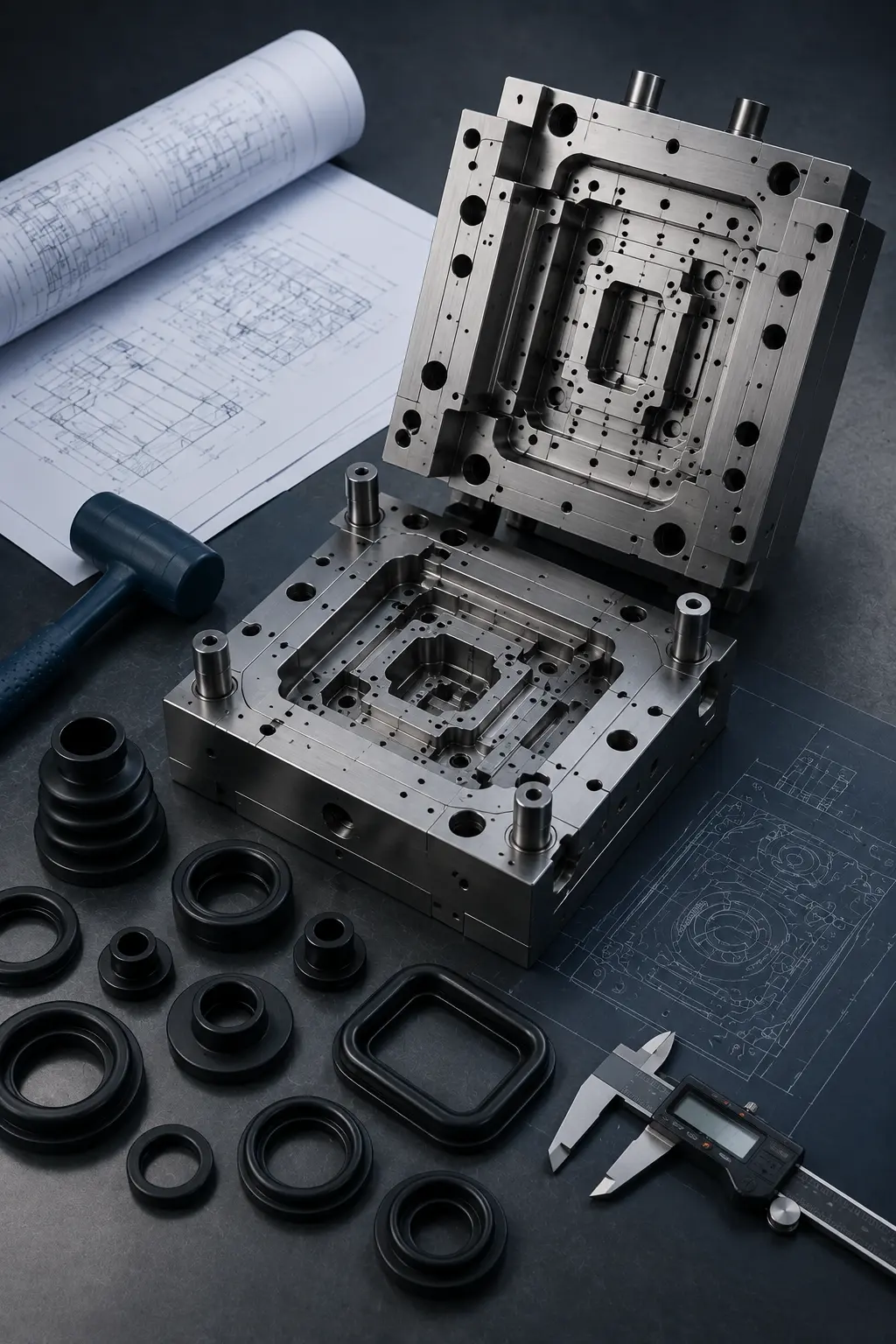
Krishani Product Development provides custom rubber molding services for manufacturers seeking high-quality, application-specific rubber components. We design and manufacture custom molded rubber parts that meet precise performance, dimensional, and durability requirements for a wide range of industrial applications. From concept and prototyping to production, our team works closely with customers to develop components that align with their engineering specifications, functional needs, and production goals.
TALK TO OUR TEAM →Ready to See your Idea into Reality
Discuss your Requirements with our Product Expert!... Already served 670+ Clients
Material options for demanding environments
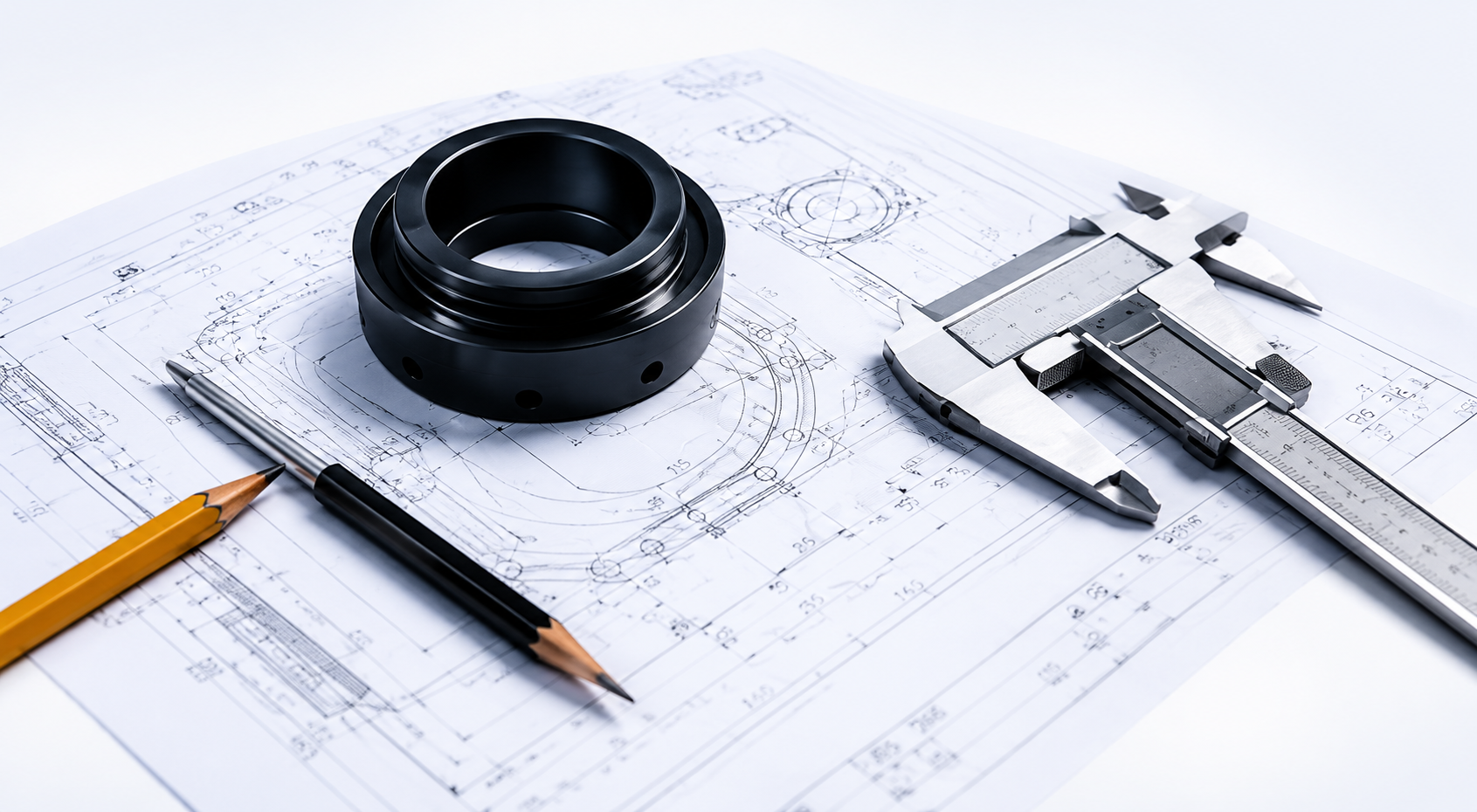
Selecting the right material is one of the most important decisions in component development. Different rubber compounds offer different advantages depending on the operating environment. The performance of a rubber part often depends as much on material selection as it does on design. Choosing the right compound helps support durability, reliability, and long-term service life.
EPDM
EPDM is widely used for applications exposed to weather, sunlight, moisture, and ozone. It is commonly selected for outdoor equipment, HVAC systems, electrical enclosures, and construction-related products.
Nitrile (NBR)
Nitrile offers excellent resistance to oils, fuels, and many industrial fluids. It is frequently used in automotive systems, hydraulic equipment, machinery, and fluid transfer applications.
Viton (FKM)
Viton is often chosen for applications involving elevated temperatures and aggressive chemicals. It is commonly used in industries where standard elastomers may not provide sufficient resistance.
Neoprene (CR)
Neoprene provides a balanced combination of durability, weather resistance, and mechanical performance. It is suitable for a wide range of industrial and commercial applications. Neoprene provides useful resistance to many petroleum-based lubricating oils and is often suitable for applications involving splash or intermittent contact.
Components we manufacture |
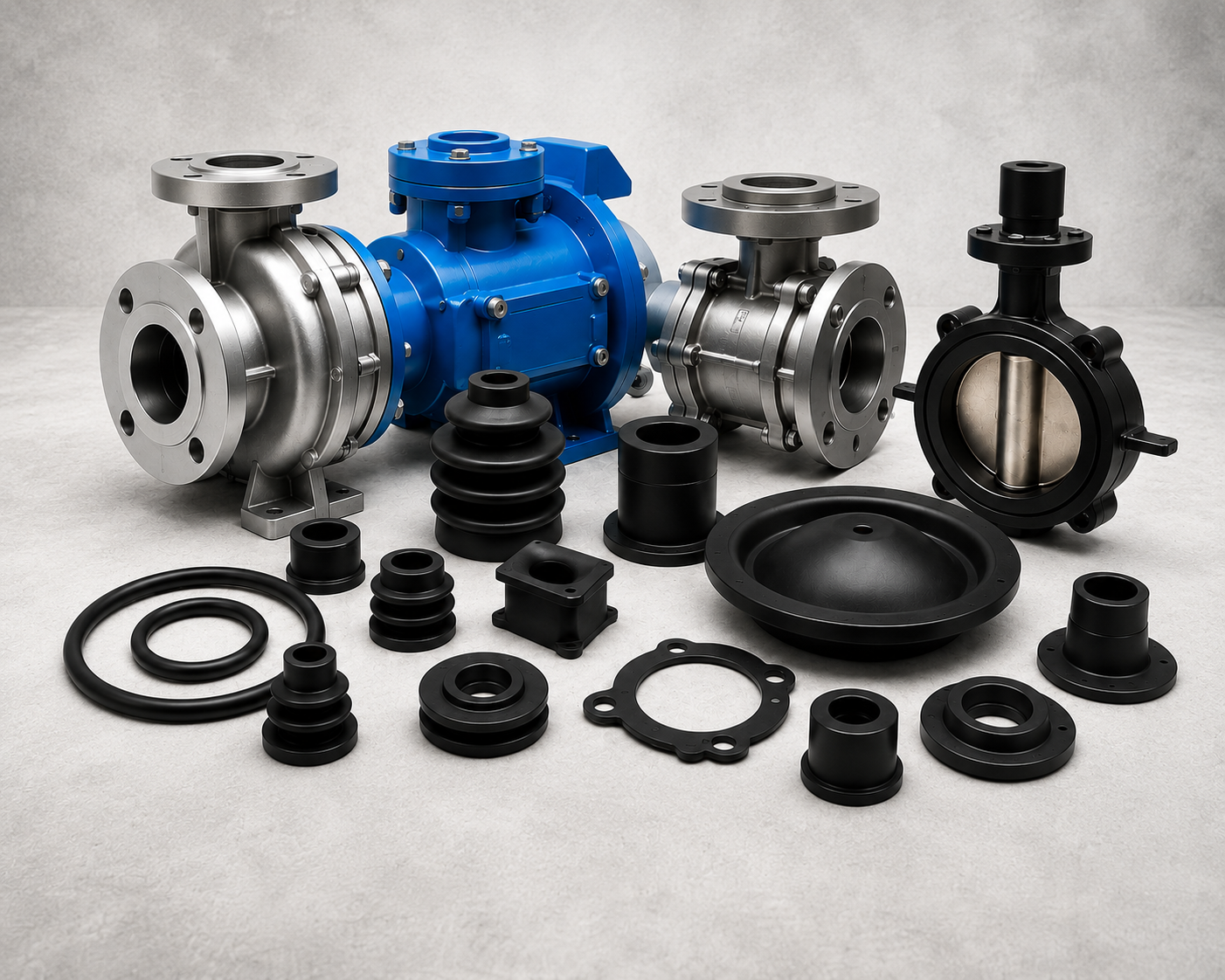
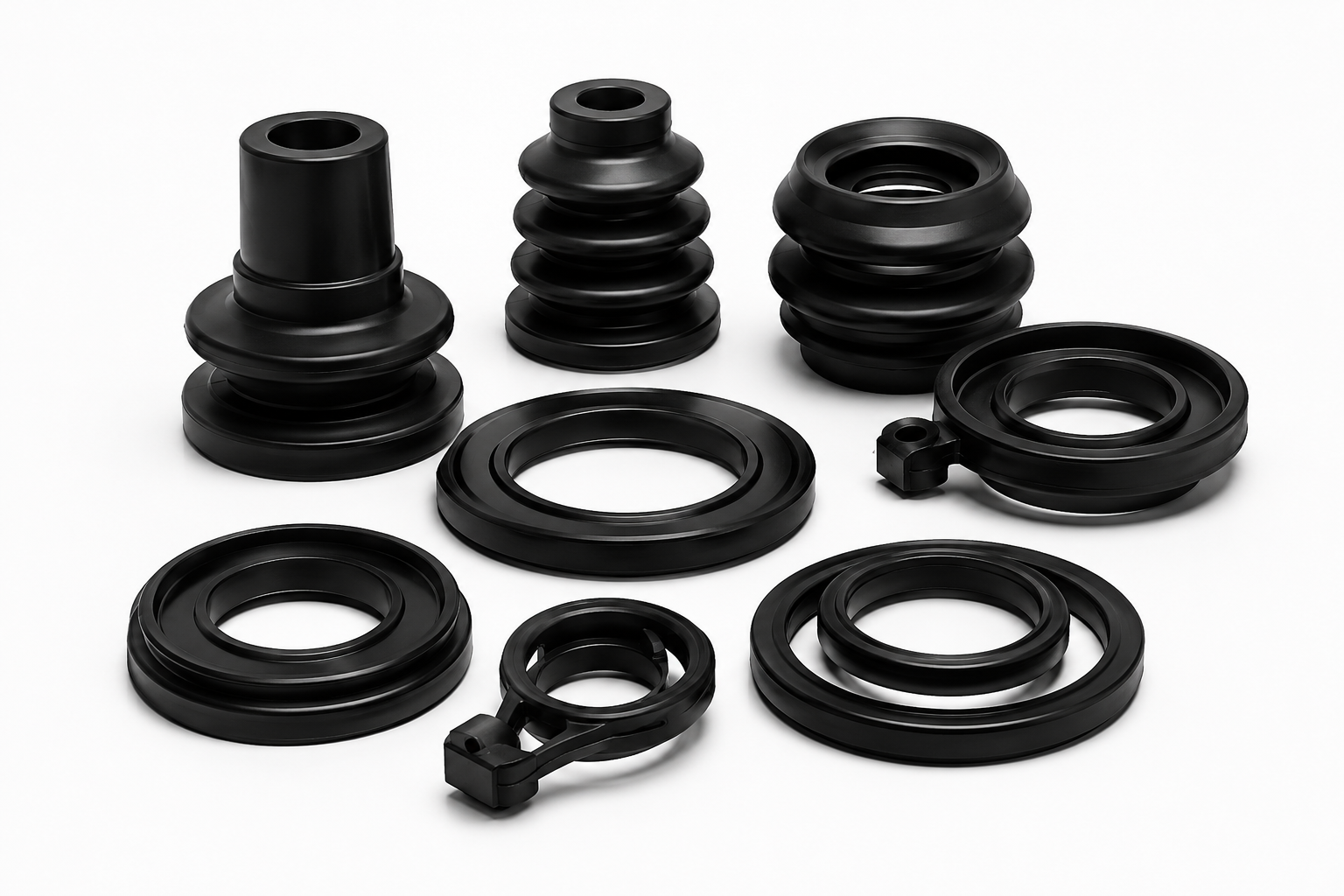
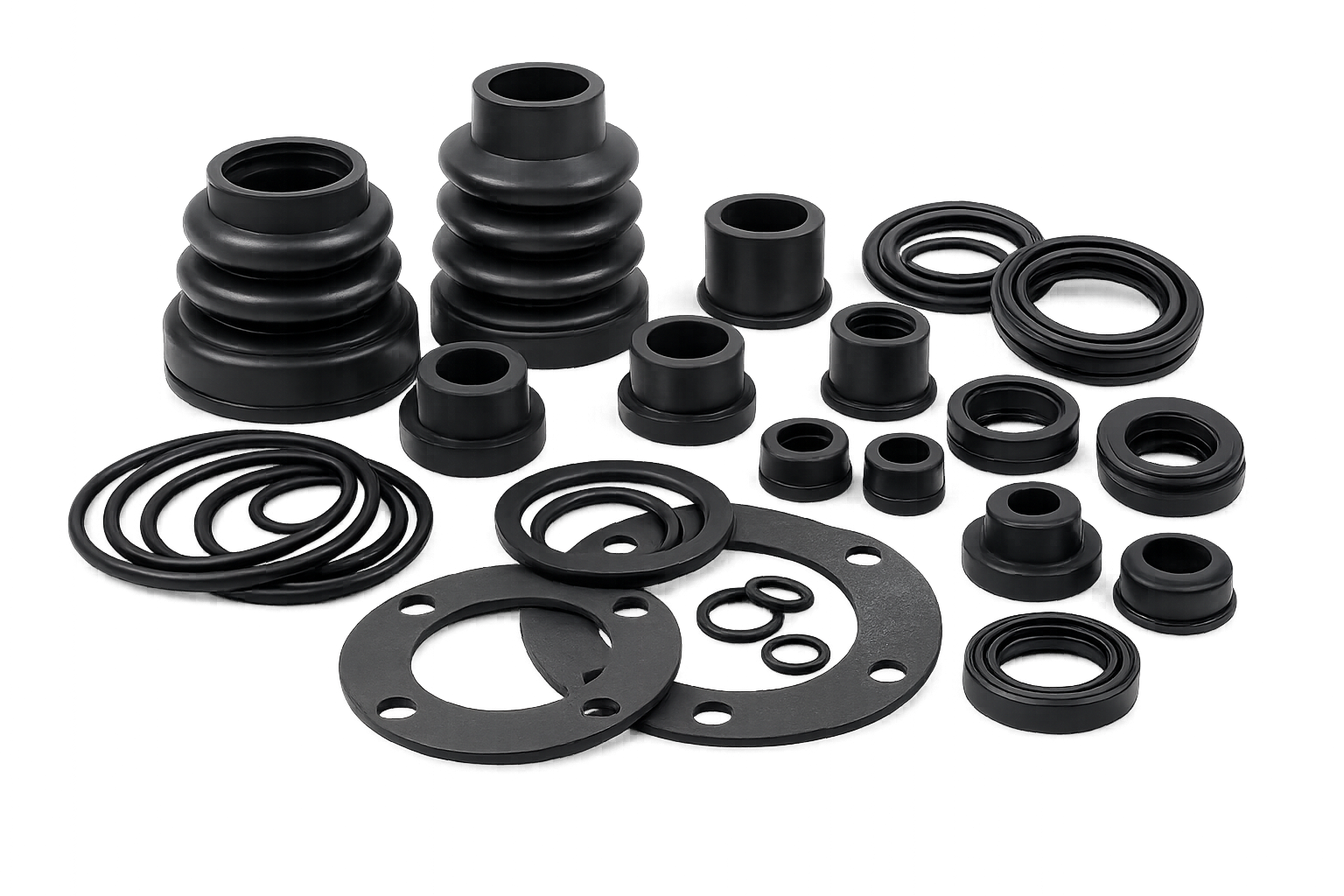
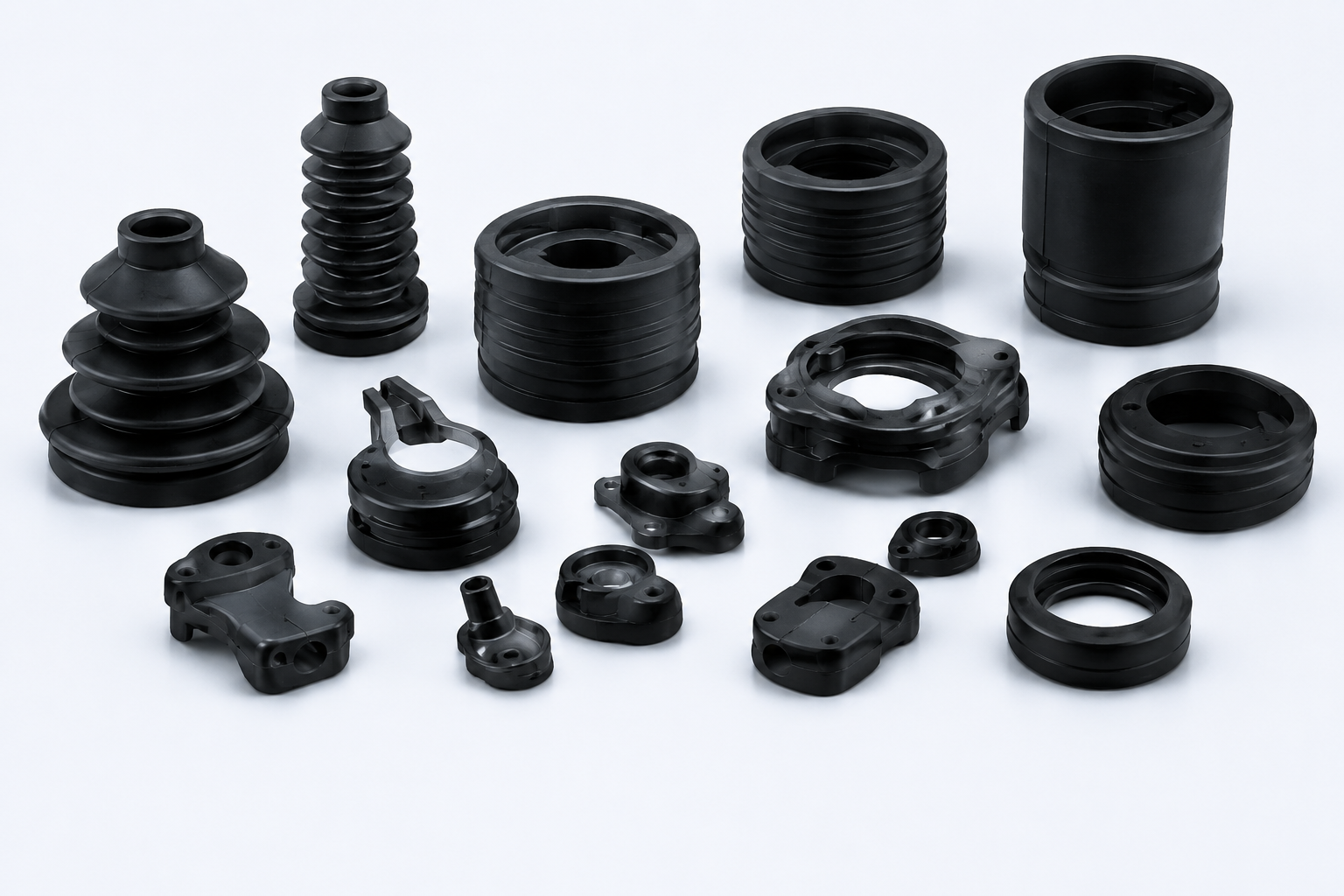
Through our rubber molding capabilities, we manufacture a wide variety of parts used across industrial and commercial applications. Some designs create reliable sealing surfaces, while others isolate vibration, protect sensitive equipment, prevent contamination, or support fluid-handling systems. These components are commonly used in pumps, hydraulic equipment, and valve assemblies, including ball valves, gate valves, globe valves, and butterfly valves, where reliable sealing and protection are essential.
Every application comes with different requirements, which is why we consider factors such as operating conditions, material selection, and part design throughout the manufacturing process.Common products include:
- Gaskets and seals
- Bellows and protective boots
- Bushings
- Vibration isolation components
- Equipment mounts
- Diaphragms
- Dust and environmental covers
- Protective caps
- Custom sealing solutions
- Flexible connection components
Depending on the design and intended use of the part, engineers may use different manufacturing methods to achieve the required performance and consistency. Whether it's a straightforward sealing application or a more demanding industrial requirement, the focus remains on producing parts that perform reliably in service.
Supporting consistent production quality|
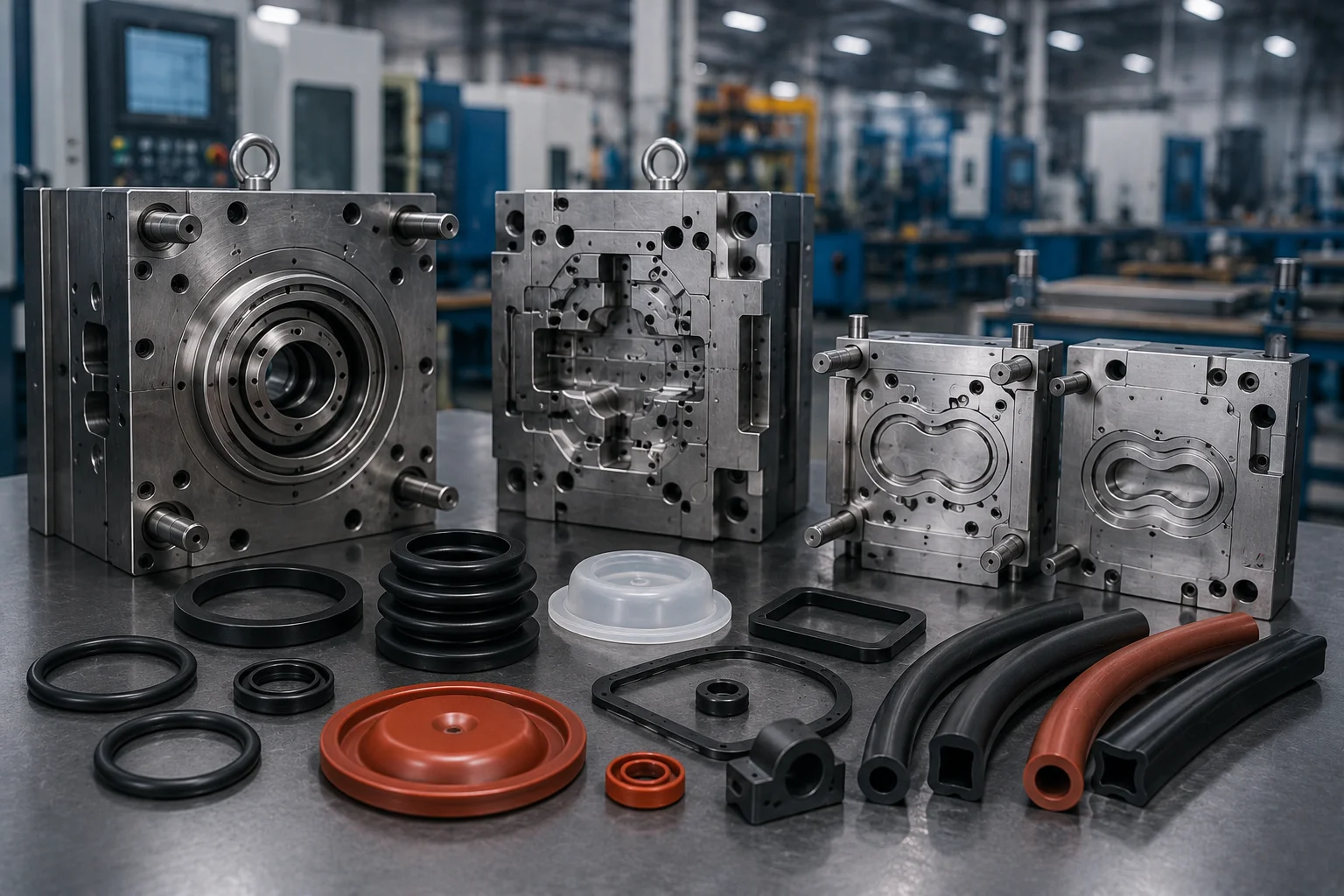
Manufacturing reliable rubber components requires more than simply matching a drawing. Material behaviour, tooling design, processing parameters, and quality controls all influence consistency throughout production.To support production stability, we focus on
- Material selection based on application requirements
- Tooling designed for repeatable manufacturing
- Process control throughout production
- Dimensional and visual inspections
- Consistent quality across prototype and production runs
Our capabilities support everything from initial development quantities to larger manufacturing programs. The goal is to deliver components that meet customer specifications while maintaining reliable performance from one production batch to the next.
Learn MoreRUBBER MOLDING PROCESSES WE USE
In rubber manufacturing, the process really depends on how the part is designed, what material is being used, and how many pieces are needed. Different methods are used in practice, and each one behaves a bit differently in terms of cost, consistency, and detail.
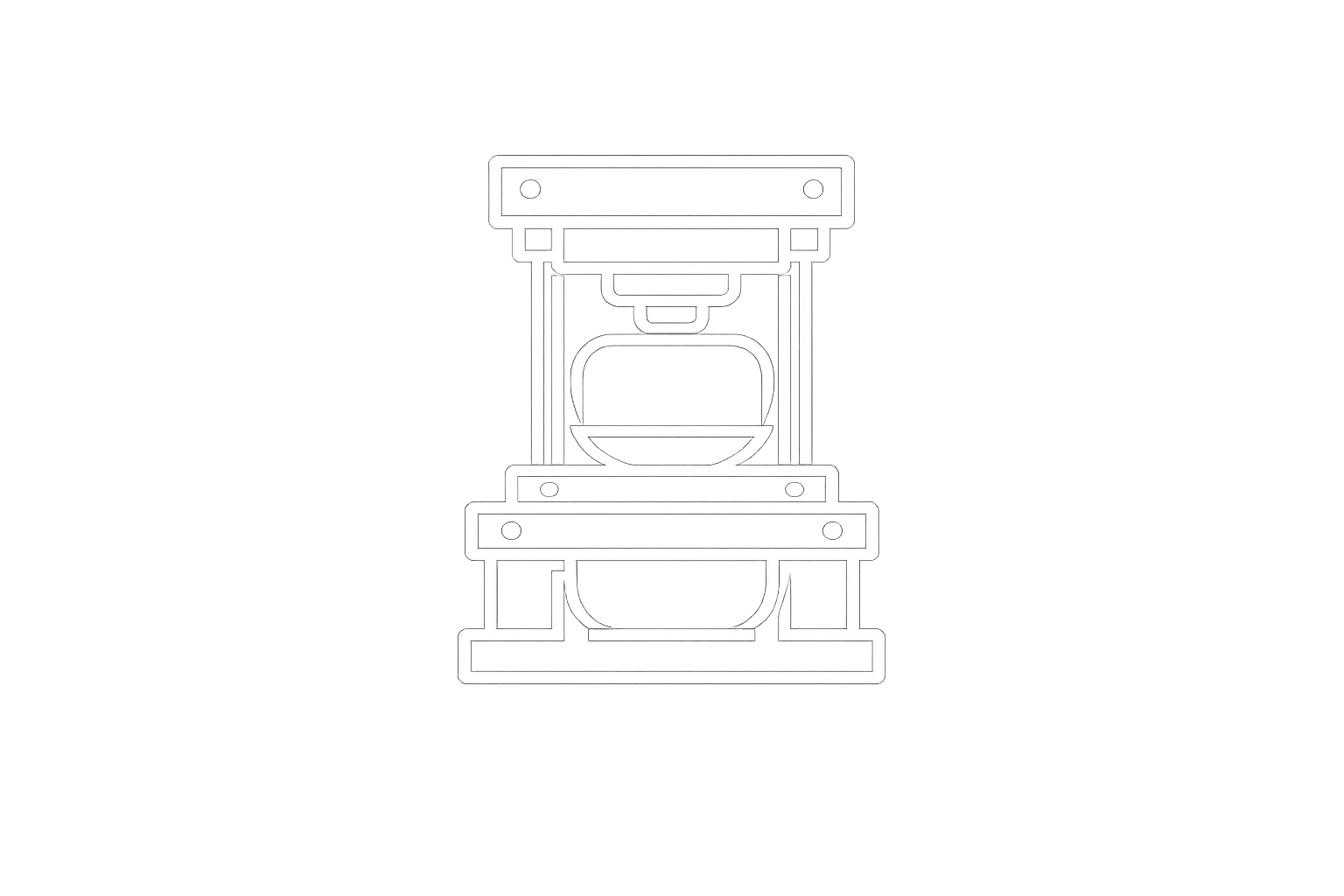
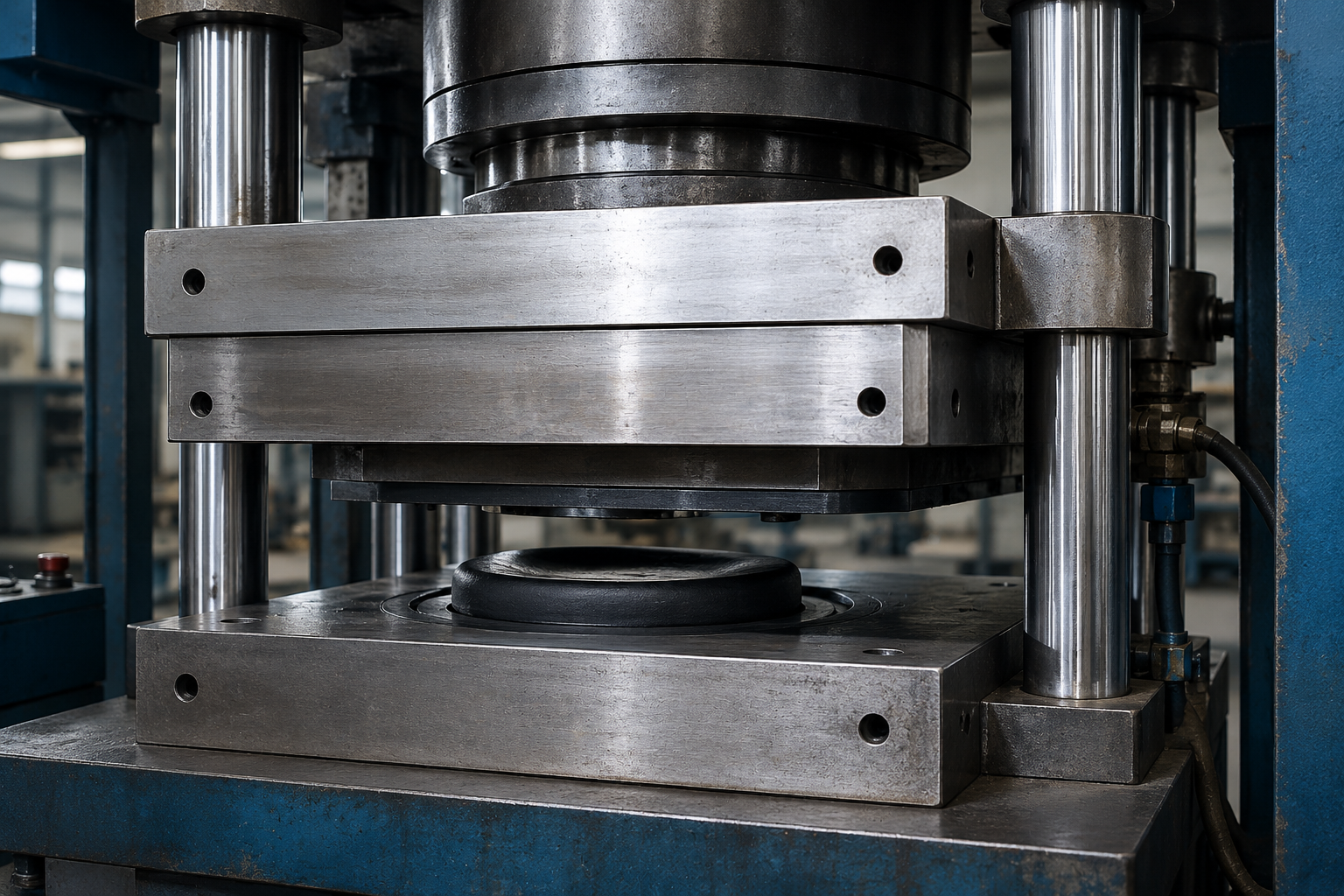
Compression Molding
This is one of the more commonly used methods for medium production quantities and larger rubber parts. It's relatively straightforward and cost-friendly, especially when working with materials like EPDM or NBR.
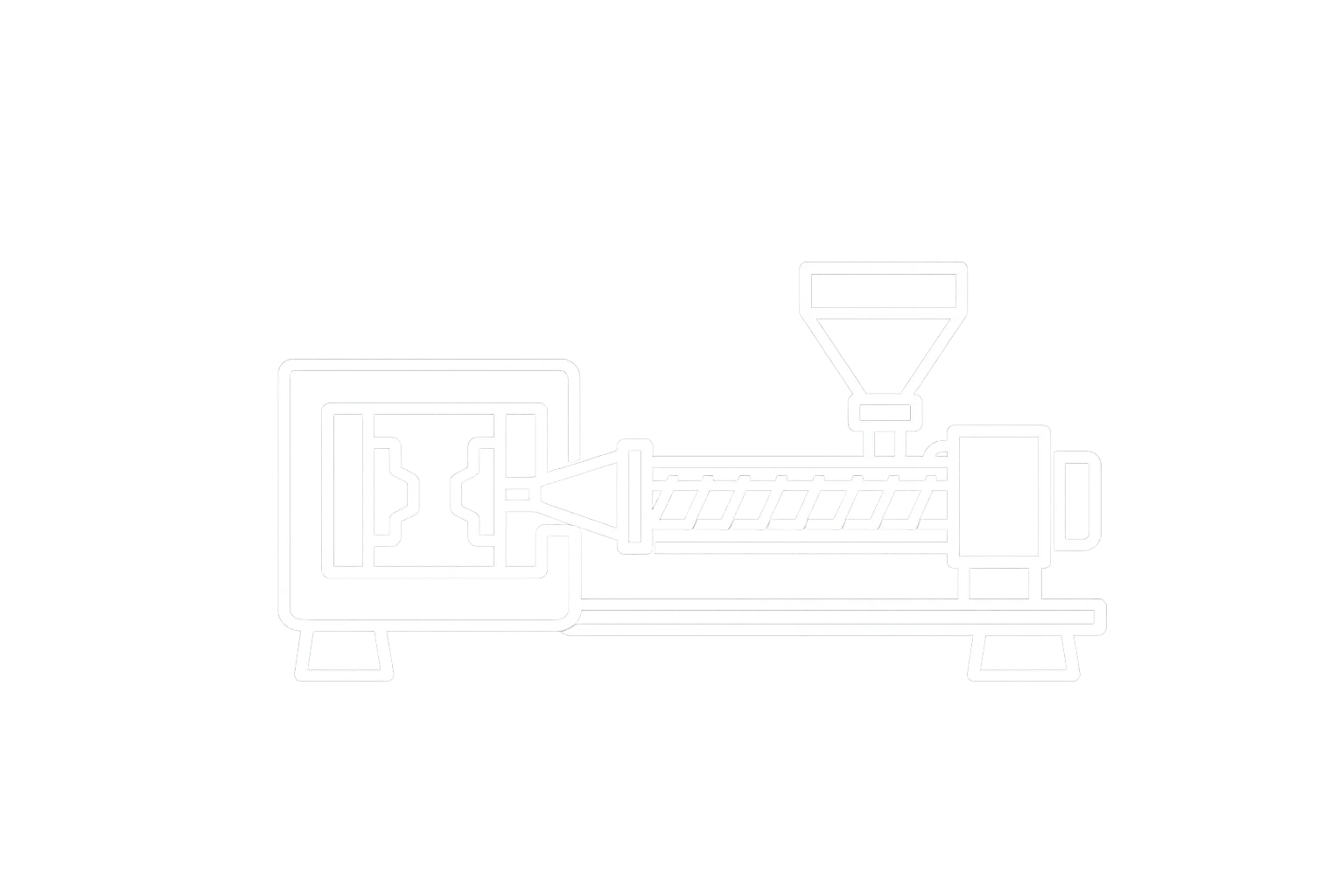
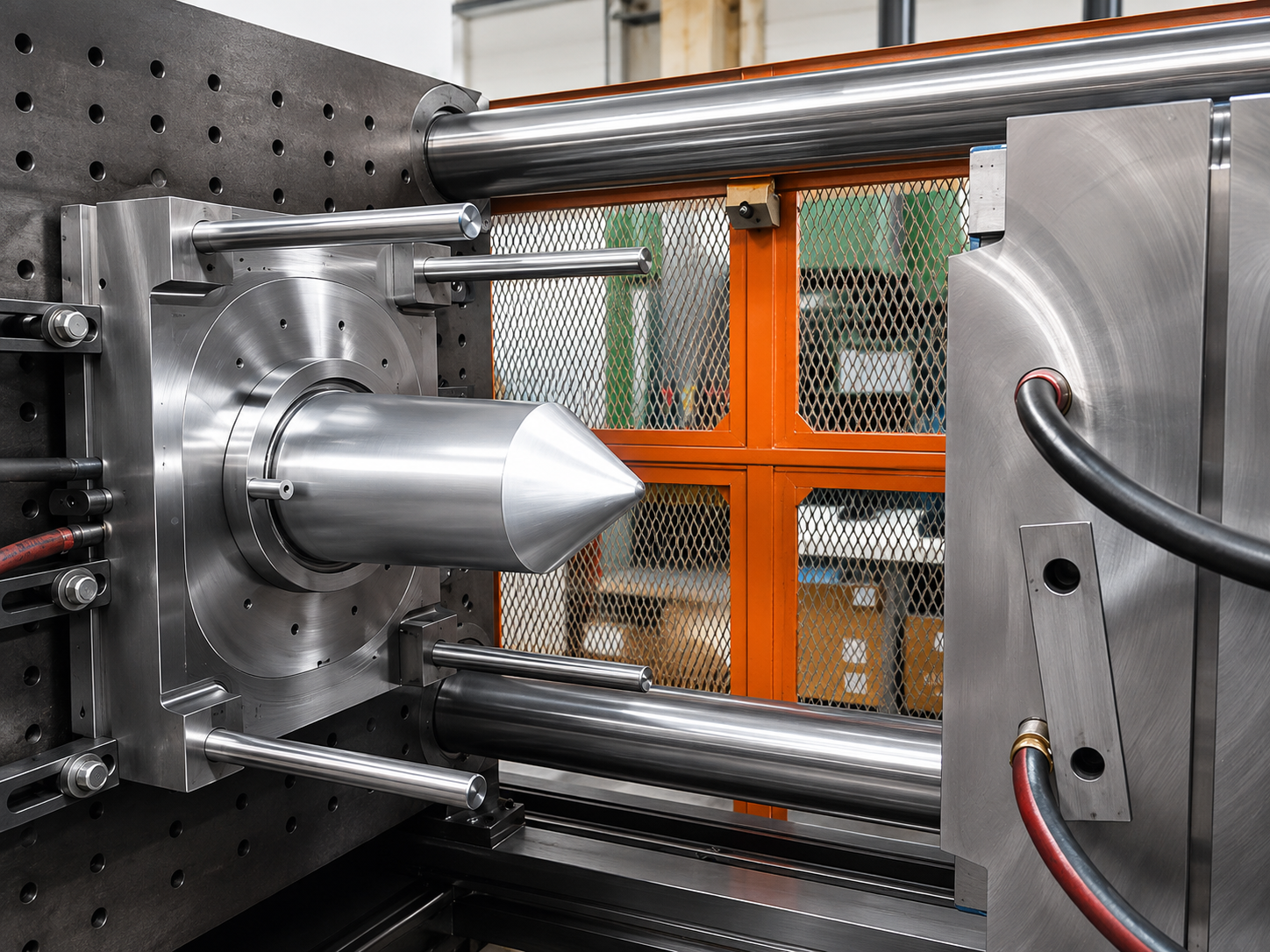
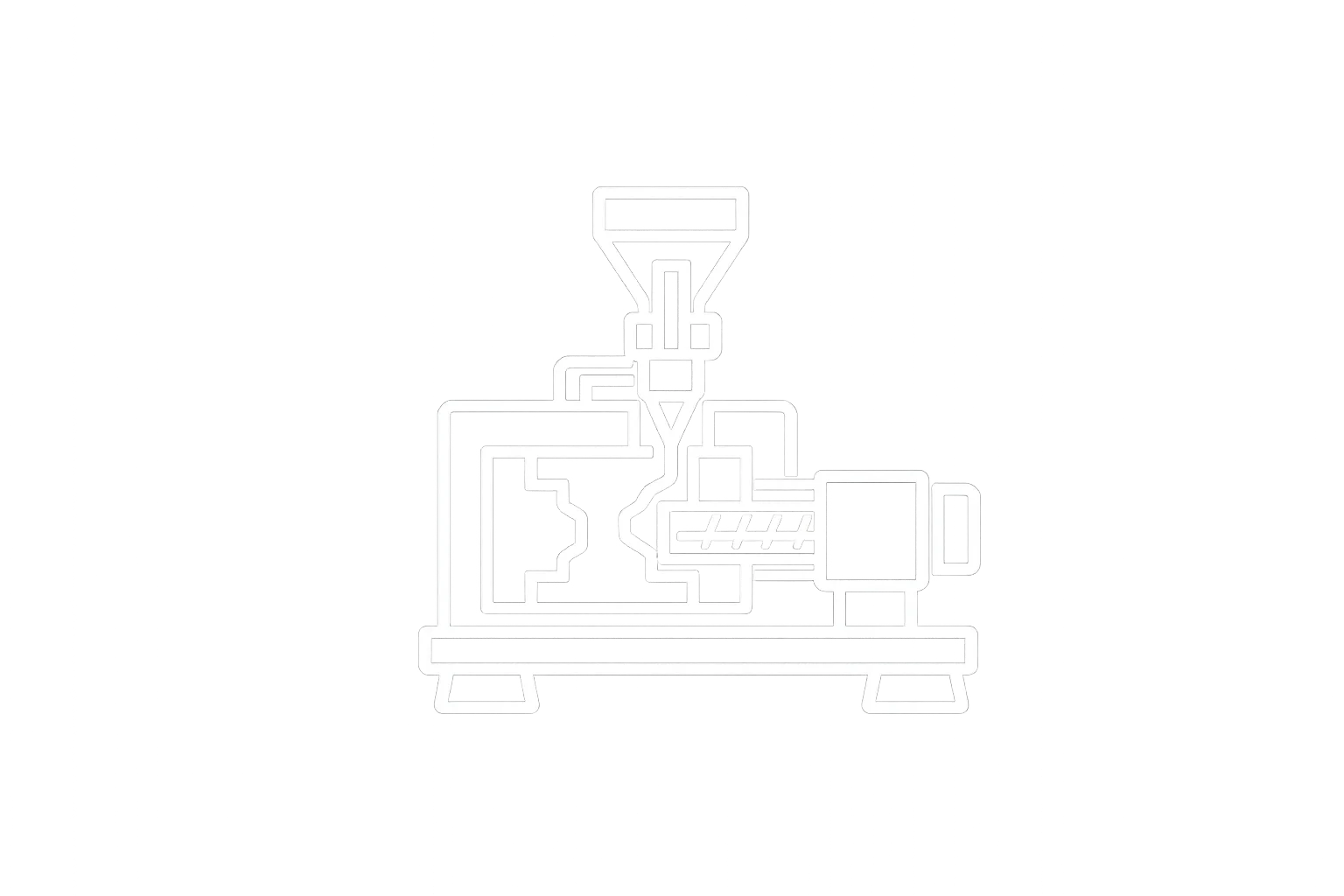
Injection Molding
Injection molding is generally preferred when the requirement shifts toward higher volumes or more detailed geometries. Since the material is pushed into a closed mold under controlled conditions, the results tend to be more consistent.
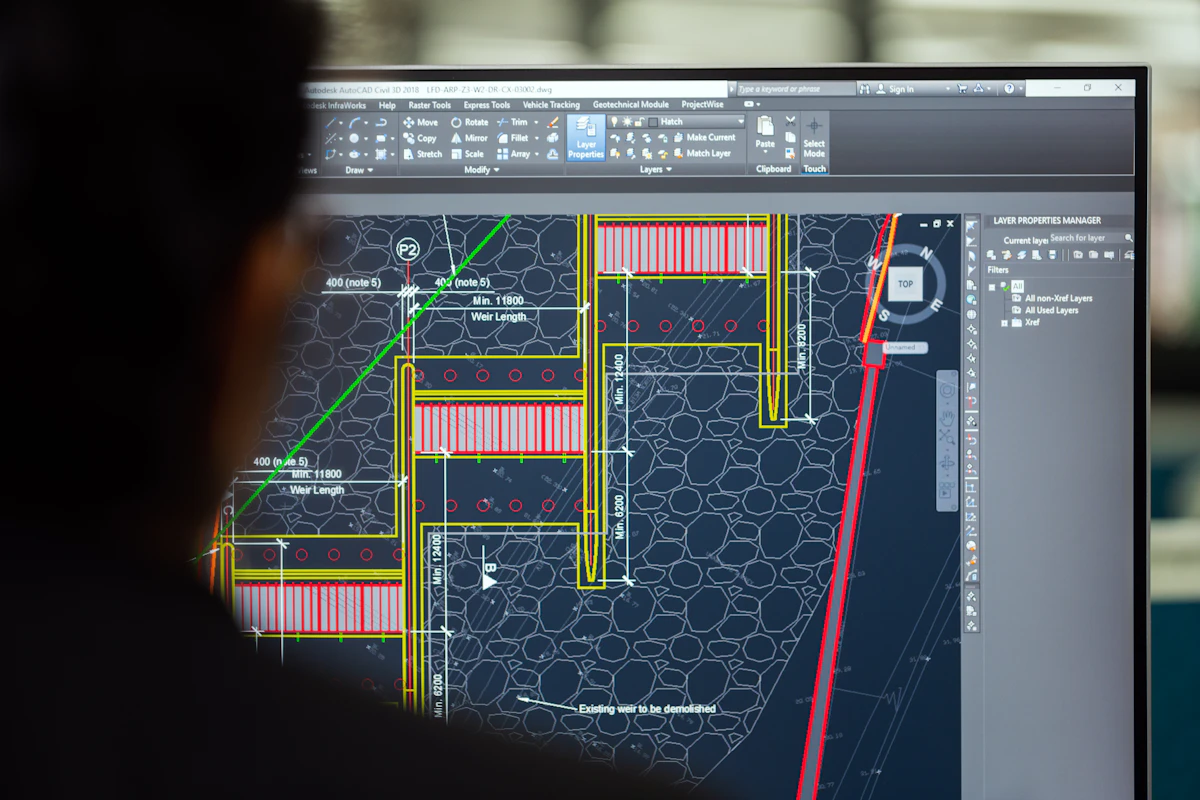
Transfer Molding
This process is somewhat between compression and injection. It is used when compression molding doesn't give enough control over dimensions or when inserts need to be held in place during molding.

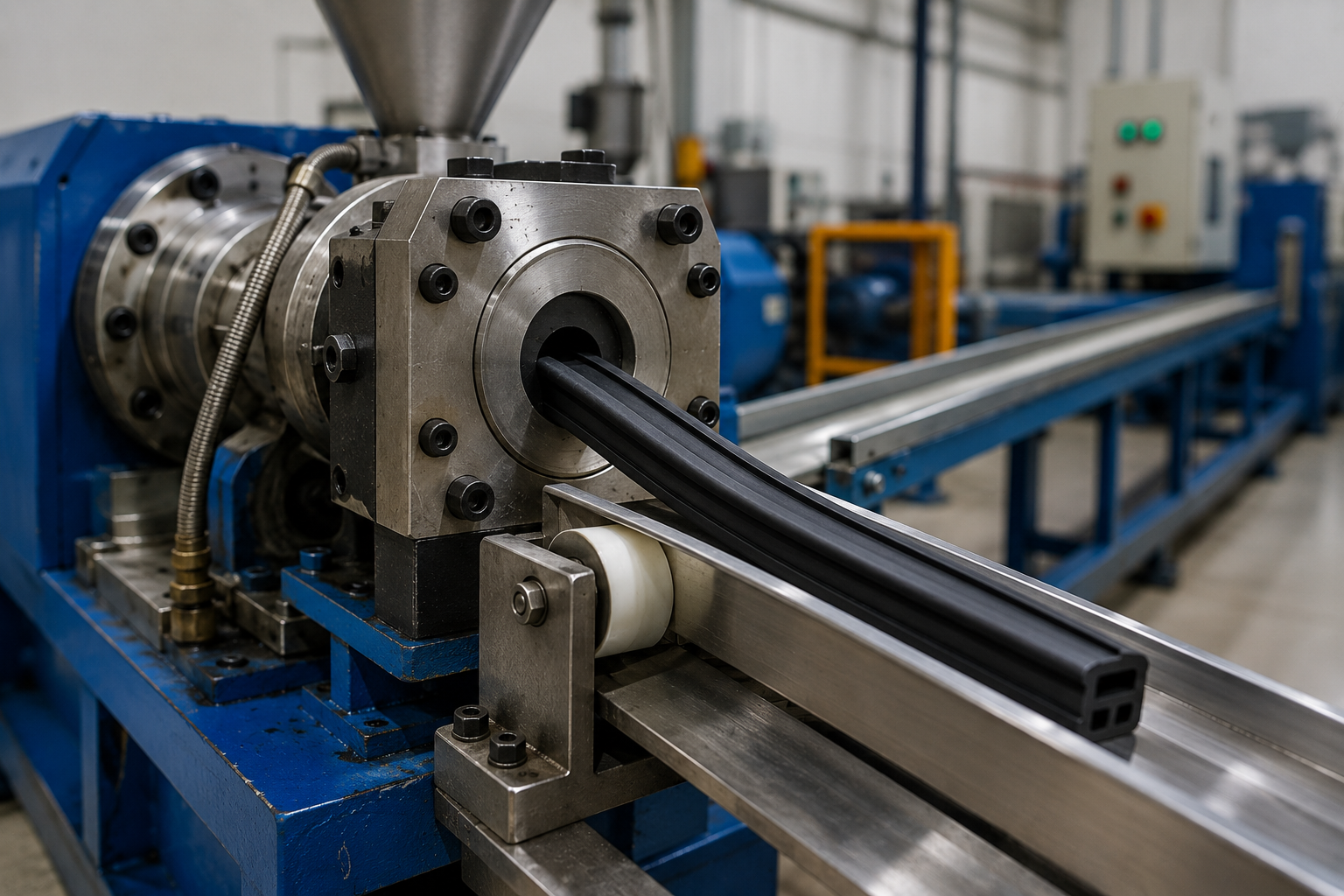
Extrusion
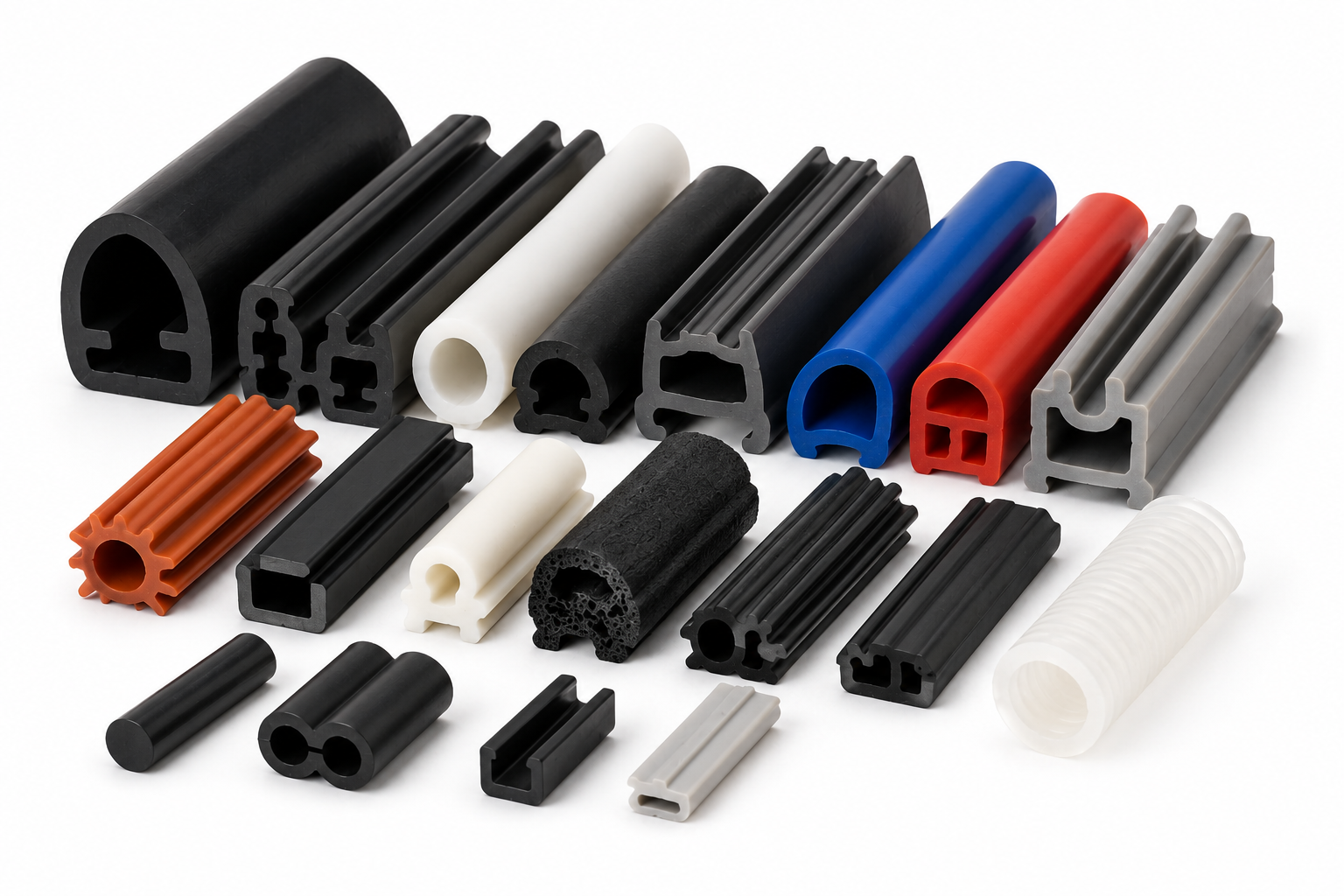
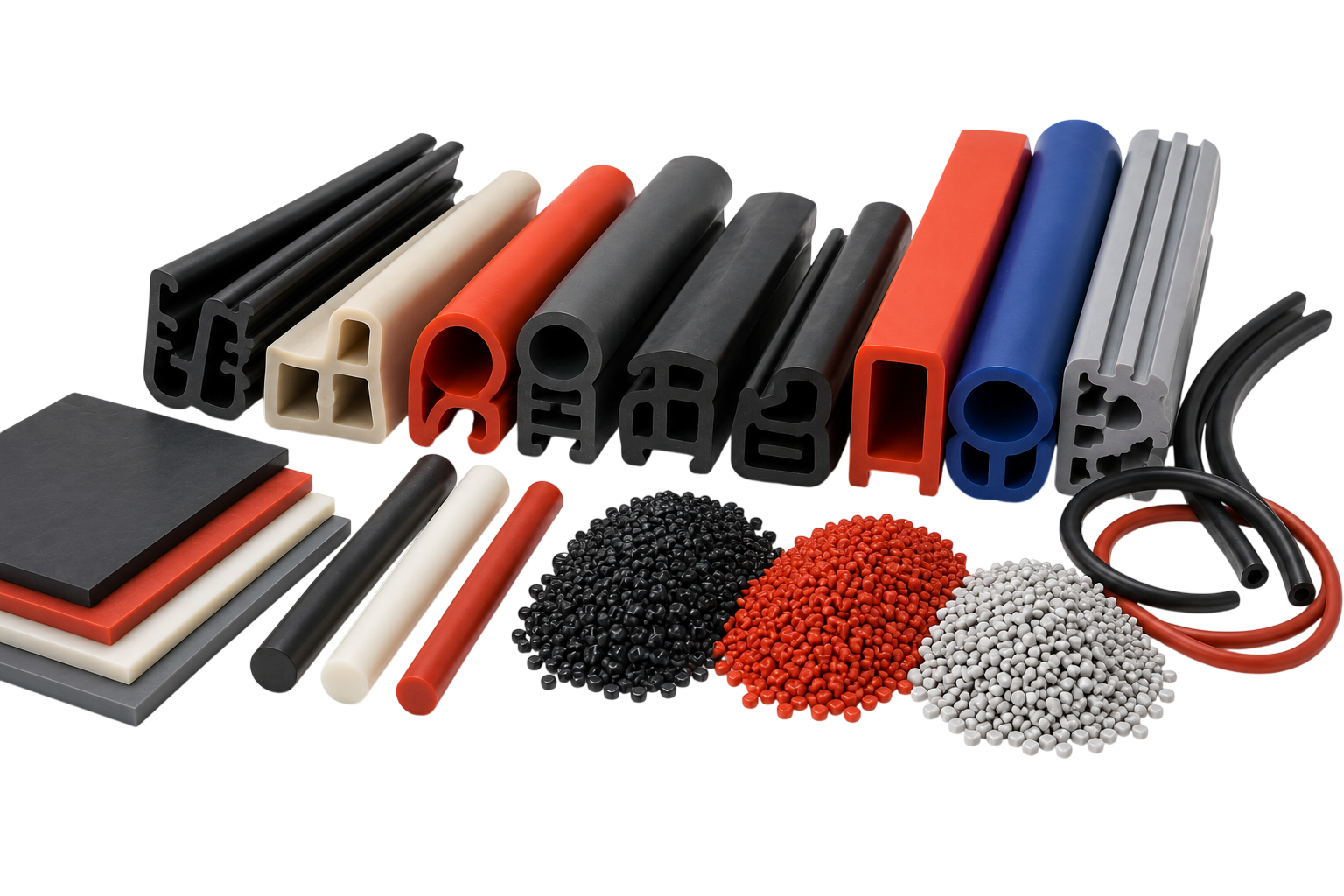
Extrusion is a bit different from the other three. Instead of forming individual parts, it produces continuous rubber profiles, cords, strips, or sealing sections and is commonly used for long sealing runs.
FROM CONCEPT TO
PRODUCTION |
The success of a rubber component often depends on decisions made before manufacturing begins. Material choice, part geometry, tooling strategy, and production requirements can all influence performance, cost, and lead time.
Our team works with customers during the early stages of development to review application requirements and identify practical manufacturing solutions. This collaborative approach helps address potential challenges before production starts, reducing unnecessary revisions and supporting a smoother development process.
OUR SUPPORT CAN INCLUDE:
- Material recommendations based on operating conditions
- Design feedback for improved manufacturability
- Tooling and production planning
- Prototype development and evaluation
- Transition to full-scale manufacturing
For projects that require dedicated tooling, we also provide rubber mold manufacturing services to help accelerate product development and production readiness.

INTEGRATED RUBBER
MANUFACTURING CAPABILITIES
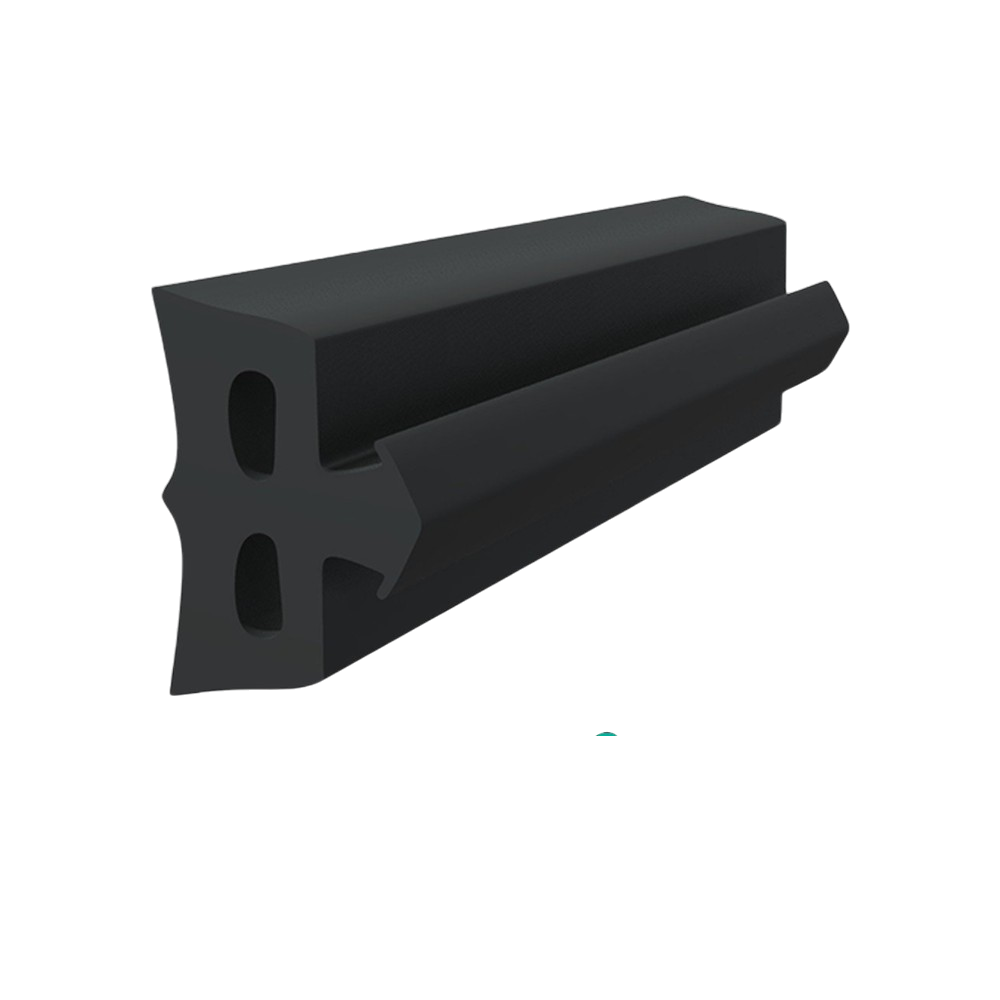
Many products rely on multiple rubber elements working together within the same assembly. To support these requirements, we also provide rubber extrusion services for continuous profiles and custom shapes used across various industries.
Industries We Serve
| Industry | Overview | Explore | |
|---|---|---|---|
 Automotive
|
Custom components for sealing, vibration control, electrical systems, and vehicle assemblies. | Learn More | |
 Medical
|
Precision rubber and silicone components for medical devices and healthcare equipment. | Learn More | |
 Food & Beverage
|
Hygienic rubber, silicone and plastic components for food processing and beverage manufacturing equipment. | Learn More | |
 Electronics
|
Components for electrical insulation, connector systems and electronic assemblies. | Learn More | |
 Industrial Equipment
|
Durable rubber, plastic and silicone components for industrial machinery and equipment. | Learn More | |
 Consumer Products
|
Custom molded rubber, silicone and plastic components for a wide range of consumer products. | Learn More |
What Our | Client's Says
The best measure of our work is the success of our customers. Here's what manufacturers, OEMs, and product developers have to say about working with Krishani Product Development.

Drew Simpson
(CEO,R3SEARCH)
Hi, my name is Drew and I recently worked with Krishani Product Development, and it was a pleasure working with them. They were always easy to get in touch with, quickly answering my questions and concerns. Their regular updates and transparency at every stage made the product development journey smooth and gave me "Peace Of Mind"

Clark Brewer
(CEO,PRATERS)
We worked with Krishani for the first, and DEFINITELY not the last time. Their team was a huge help and took the time to walk me through different rubber and silicone materials and their benefits and suggested the grade best suited to my product. It was a new development and I am fully satisfied with the service and the product they developed. I couldn’t ask for more.

Derek Smith
(Director Operations)
At first, we hesitated to collaborate with Krishani Product Development because of their development center in India. However, any concerns vanished swiftly. Their thorough understanding of our requirements and transparent communication overcame any geographical barriers. They have not only met but surpassed our expectations by delivering high-caliber products ontime. They are not only manufacturers but they proved to be invaluable development partners. We would highly recommend their services to anyone looking for product development.
FAQ's
Lorem ipsum dolor sit amet, consectetur adipiscing elit, sed do eiusmod tempor incididunt ut labore et dolore magna aliqua. Duis aute irure dolor in reprehenderit
01 Do I need a custom mold for my rubber part?
If your part has unique dimensions, material requirements, or performance specifications, a custom mold is usually the best option. Custom tooling is designed around the specific part and manufacturing process, helping improve consistency, repeatability, and overall production performance.
02 Which rubber materials can be used with custom tooling?
Custom tooling can be developed for a wide range of rubber materials, including EPDM, silicone, nitrile, neoprene, and natural rubber. The material selection depends on the application's requirements, such as temperature resistance, weather exposure, chemical compatibility, and durability.
03 Why does tooling matter in rubber molding?
Tooling has a direct impact on dimensional accuracy, material flow, cycle efficiency, and overall product quality. Well-designed tooling helps support stable production processes and consistent manufacturing results over time.
04 What's the difference between prototype tooling and production tooling?
Prototype tooling is typically used during product development to evaluate part fit, function, and manufacturability before full production begins. Production tooling is designed for long-term manufacturing and is built to support higher volumes while maintaining consistent quality.
05Can rubber tooling support high-volume production?
Yes. When the tooling is properly designed and manufactured, it can support high-volume production while maintaining part quality, process stability, and manufacturing consistency over extended production runs.